What is Cryotherapy?

The term ‘cryotherapy’ literally means ‘treatment using low temperature’, and refers to the removal of skin lesions by freezing them. The most common agent used is liquid nitrogen.
What is liquid nitrogen?
Liquid nitrogen is the liquid state of gaseous nitrogen, which occupies 78{0b3bb29a42d9c987160b554f8721f73045ae0e056ae4f1d9c44003a0ff24cf20} of the air we breathe. Liquid nitrogen is extremely cold, boiling at minus 196°c. It is necessary to store and transport it in special flasks.
What conditions can be treated with Cryotherapy?
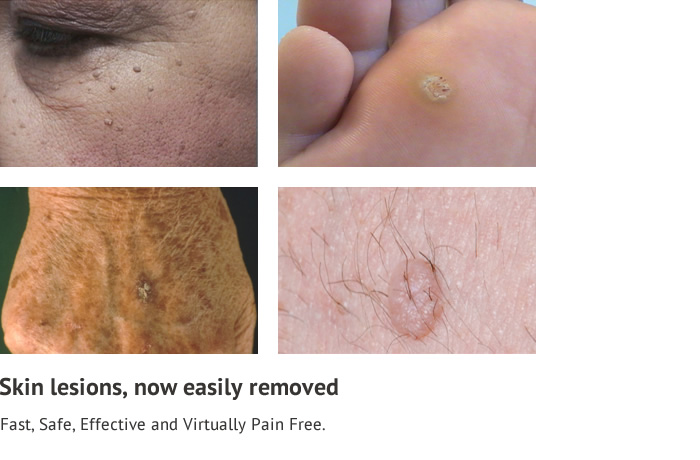
A wide variety of superficial benign lesions can be treated with cryotherapy, but it is most commonly used to remove actinic keratoses (an area of sun-damaged skin found predominantly on sun-exposed parts of the body), viral warts, seborrhoeic keratoses and other benign lesions.
What does the procedure involve
Cryotherapy is done during the course of a routine out-patient consultation without any special preparation.
Whilst liquid nitrogen is usually applied to the skin by using a spray gun, a metal probe or a cotton bud can sometimes be used instead of the spray gun.
Cryotherapy does not normally require a local anaesthetic, and the procedure itself lasts a matter of seconds; the precise time depending on the thickness and size of the lesion. The frozen skin becomes white and takes one to two minutes to thaw to normal skin temperature. Your doctor may suggest that the process is repeated once the skin has thawed out.
Over the succeeding few days, a scab will form, and this will take one to two weeks (and occasionally a little longer, especially on the legs) to come away. Usually, the treated area will eventually look normal, although scarring and discolouration is possible, particularly on the legs.
Depending on the nature of the lesion, more than one treatment may be necessary, and this is usually repeated at regular intervals.